

In winter, the Étangs de Commelles feel calmer… and that is precisely what makes them so compelling. With less foliage, there are more silhouettes and more signs to read: nature becomes easier to observe, even for beginners. It’s a walk that teaches you to look and listen—and to realise that winter is not an empty season, just a quieter one.
At the Étangs de Commelles, winter has a huge advantage: it simplifies everything. Less foliage, less visual “noise”… and therefore more chances to see, to hear, and to understand what is happening around you—even if you are just starting out.
That morning, the air is crisp but pleasant. The path is quiet, and the water is almost still. You might think everything is asleep. In reality, it is the opposite: nature is there, but it does not announce itself. It reveals itself to those who take their time.
From the very first steps, the setting does much of the work: water, reedbeds, and a forest edge. This is exactly what many animals look for in winter, because it gives them three essentials: food, cover, and routes to move without being noticed. For us, it is perfect: it creates easy “scenes” for observation.
On the edge of the first pond, you will often spot a large solitary bird, motionless, perched like a statue: the heron. It is the kind of winter observation that stays with you because it is simple and clear. You immediately grasp an important point: in winter, animals conserve energy. They move less, but they are there. You just have to learn how to notice what does not move.
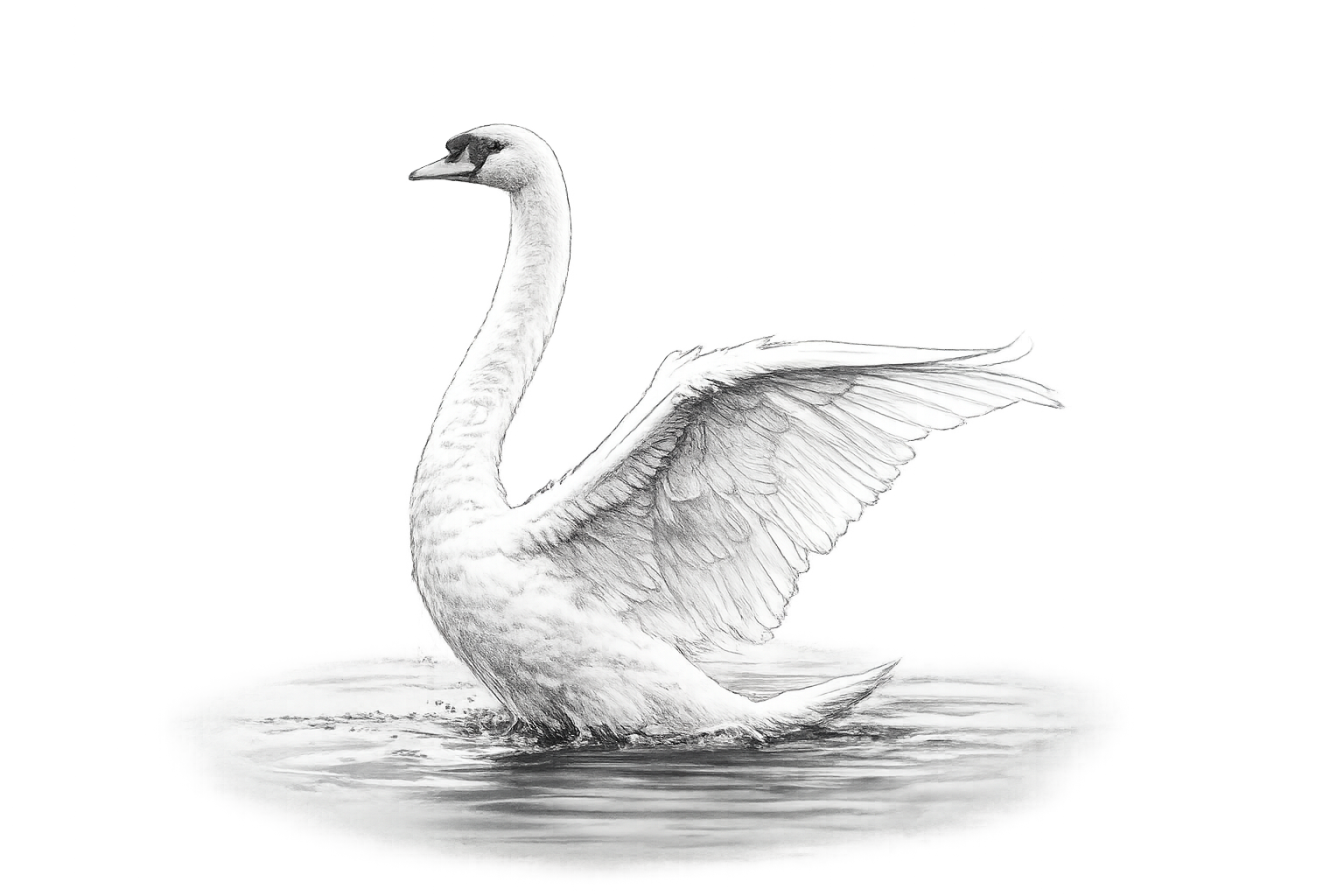
Then there are the waterbirds. Even without knowing their names, you can start recognising them in other ways: size, shape, how they swim, dive, or gather. Some stay close to the banks, others prefer open water; some dive regularly, others “filter” at the surface. Within minutes, you begin to see differences. And that is what feels good: you make progress without even realising it.
Along the reedbeds, you sometimes hear small, dry sounds—a discreet “tick”—or a quick rustle. Often you do not see the bird straight away. But you know it is there. And that is another winter rule: you also observe with your ears. At Commelles, water carries sound, and the forest answers back. It is almost a concert hall, but in a natural, subtle version.
As you continue along the shore, you often come across what I call “small proofs”: a feather on the ground, a footprint in the mud, a trail along the water’s edge. Nothing spectacular, yet everything tells a story—who passed, in which direction, and where, sometime last night or early this morning. After rain, or when a frost thaws, the ground becomes a real book. It is the best time to learn to watch the ground as much as the sky.
And then there is a very simple, very “Commelles” pleasure: shift your angle slightly and watch the landscape change. In winter, the light is low. If you face the sun, you may see only silhouettes. Step a few paces to the side and put the light behind you, and details appear: colours, shapes, movements. It is a very basic trick, but it changes everything. Many people think they “can’t see anything” when they are simply standing in the wrong place.
In certain spots, your gaze naturally lifts towards the forest edge. And there, you often find lively scenes: small flocks of tits and other woodland birds moving together, quickly, like a well-organised crew. It shifts, it calls, it inspects branches, it searches bark. It is joyful, efficient, and especially easy to watch in winter because the leaves are no longer there to hide it all.
What I particularly love about the Étangs de Commelles in winter is this feeling of “reading” the landscape. You do not need to know every species by heart. You can simply learn to see: water that gathers life, edges that concentrate activity, forest that shelters, tracks that reveal. It is a walk that quickly shows you nature is close—and that it is not reserved for experts.
If you like, we can experience this together on a guided nature walk: I’ll show you where to look, what to listen for, and above all how to observe without disturbing. And you’ll see that at Commelles, even in the heart of winter, something is always happening.